Footwear Size Charts Explained: How to Find the Perfect Fit Across US UK and EU Sizes

Updated: 5 days ago
A shoe that’s “your size” can still feel wrong. Too tight in the toes, loose at the heel, pinchy across the top, or fine in the store and miserable after an hour. That’s because footwear sizing isn’t as universal as it looks.
A size 8 in one system doesn’t match a size 8 in another. Even within the same system, the fit can change depending on the shoe type, the shape of the last, the materials, and whether the style is built narrow, regular, or wide.
The good news is that shoe size charts are easier to use once you know what the numbers actually mean. This guide walks through the main sizing systems, how to measure your feet properly, and what to do when your usual size doesn’t quite work.
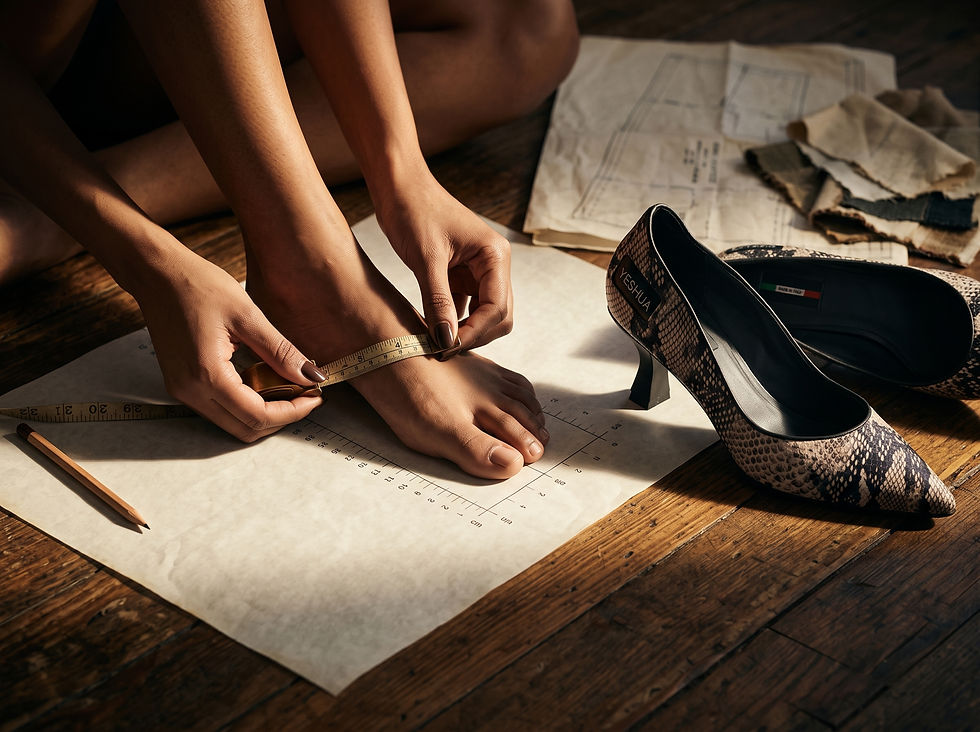
Why accurate footwear sizing matters for comfort and fit
Getting the size right isn’t just about avoiding sore toes. Shoes affect how you walk, how stable you feel, and how comfortable you are through the day.
When shoes are too small, your toes may press into the front or sides. That can cause rubbing, pressure points, and cramped movement. In colder Canadian weather, tight footwear can also feel even less comfortable when you’re wearing thicker socks.
When shoes are too large, your foot can slide around. That often leads to heel slipping, blisters, and a less secure step. You might also grip with your toes without realizing it, which can make your feet feel tired faster.
A good fit usually gives you:
Enough toe room
Your toes should be able to relax, not press hard against the front.
A secure heel
A small amount of movement is normal, but the heel shouldn’t lift out with every step.
Comfort across the widest part of the foot
The shoe should hold your foot without squeezing it.
The right depth
The top of the shoe shouldn’t press hard into your instep.
Room for the socks you’ll actually wear
Thin liners, athletic socks, and winter socks can change the fit more than you’d expect.
The number on the box is a starting point. The real goal is a shoe that matches the length, width, depth, and shape of your foot.
The main footwear sizing systems around the world
Footwear sizing systems grew out of different measurement traditions, so the numbers don’t line up perfectly. That’s why conversion charts are helpful, but they’re never perfect.
Here’s the quick version.
Sizing system | Commonly used in | How it generally works |
US and Canada | Canada and the United States | Uses separate adult men’s, adult women’s, and kids’ scales |
UK | United Kingdom and some Commonwealth markets | Similar style of numbering to US sizing, but usually about one size lower in adult sizes |
EU | Most of Europe | Uses European point sizing, often shown as whole numbers like 38, 39, 40 |
Mondopoint | Ski boots, some work footwear, some international sizing | Based on foot length, usually in millimetres or centimetres |
Japanese sizing | Japan and some international charts | Often based on foot length in centimetres |
Chinese sizing | China and some marketplace charts | May use centimetres, millimetres, or EU-style numbers depending on the chart |
US and Canadian shoe sizes
In Canada, everyday footwear is most often sold using US sizing. That means you’ll commonly see adult men’s and adult women’s sizes, plus children’s sizes.
The tricky part is that US adult men’s and women’s sizes are different scales. A women’s size is often about 1.5 sizes higher than the equivalent men’s size, although the exact fit can still vary. For example, a men’s 7 may be close to a women’s 8.5 in length.
Width labels may also appear, such as narrow, regular, wide, and extra wide. These are useful, but they’re not fully standardized across all footwear types.
UK shoe sizes
UK sizing looks a lot like US sizing, but it usually runs smaller by number. For many adult sizes, a UK size is about one size lower than a US men’s size. So a US men’s 9 is often close to a UK 8.
For adult women’s conversions, the relationship can feel less intuitive because you’re moving between both a region system and a gendered size scale. This is where measuring your foot in centimetres helps a lot.
EU shoe sizes
EU sizes are common on imported footwear and are often shown as numbers like 37, 38, 39, 40, and 41. The EU system doesn’t split men’s and women’s sizing in the same way US sizing does, although specific shoes may still be shaped differently.
EU sizes are based on Paris points, a traditional unit used for footwear. You don’t need to calculate that yourself. What matters is that EU sizing often gives a useful middle ground when converting across regions.
Mondopoint and centimetre-based sizing
Mondopoint is one of the clearest systems because it relates directly to foot length. It’s often used for ski boots, some safety footwear, and technical footwear. A size listed as 270 usually refers to a foot length around 270 millimetres, or 27 centimetres.
Japanese sizing often works in a similar plain-language way, with sizes based on centimetres. If your foot measures 25 cm, you may see that reflected directly in the size range.
Centimetre-based sizing is especially handy when the size chart includes actual foot length. It cuts through a lot of conversion confusion.

A practical conversion chart for US, UK, EU, and centimetres
Conversion charts work best as a guide, not a final answer. Use them to find your starting size, then check the footwear’s own chart if one is available.
Here’s an approximate adult size conversion based on foot length.
Foot length | US women’s | US men’s | UK adult | EU adult |
23.0 cm | 6 | 4.5 | 4 | 36 to 37 |
23.5 cm | 6.5 | 5 | 4.5 | 37 |
24.0 cm | 7 | 5.5 | 5 | 38 |
24.5 cm | 7.5 | 6 | 5.5 | 38 to 39 |
25.0 cm | 8 | 6.5 | 6 | 39 |
25.5 cm | 8.5 | 7 | 6.5 | 40 |
26.0 cm | 9 | 7.5 | 7 | 40 to 41 |
26.5 cm | 9.5 | 8 | 7.5 | 41 |
27.0 cm | 10 | 8.5 | 8 | 42 |
27.5 cm | 10.5 | 9 | 8.5 | 42 to 43 |
28.0 cm | 11 | 9.5 | 9 | 43 |
28.5 cm | 11.5 | 10 | 9.5 | 44 |
29.0 cm | 12 | 10.5 | 10 | 44 to 45 |
Use this chart with a bit of caution. Footwear shape matters. A dress shoe, hiking boot, running shoe, winter boot, and sandal can all fit differently in the same listed size.
If you’re between sizes, start by looking at foot length, then decide based on shoe type and how snug the style is meant to feel.
How to measure your feet correctly at home
You don’t need special equipment to get a useful measurement. A piece of paper, a pencil, and a ruler or tape measure are enough.
For the best result, measure both feet near the end of the day. Feet often spread slightly after standing and walking. Wear the socks you plan to wear with the shoes.
Step 1. Place your foot on paper
Put a sheet of paper on a hard floor, not carpet. Stand with your full weight on the foot you’re measuring. This matters because your foot length and width can change a little when you’re standing.
If you can, keep your heel lightly against a wall. Make sure the paper doesn’t slide.
Step 2. Trace around your foot
Hold the pencil straight up and trace around your foot. Try not to angle the pencil inward or outward, since that can change the measurement.
If tracing feels awkward, mark only the back of the heel and the tip of the longest toe. Your longest toe may not be your big toe, and that’s completely normal.
Step 3. Measure the length
Measure from the heel mark to the longest toe mark. Write the number down in centimetres.
Then measure the other foot. Many people have one foot that’s slightly longer. Use the longer foot when choosing a size.
Step 4. Measure the width
Measure across the widest part of the foot, usually around the ball of the foot. This helps you spot whether you may need a wide fit or a different shoe shape.
Width charts can be less consistent than length charts, but the measurement still helps. If the length is right and the shoe pinches across the front, width is probably the issue.
Step 5. Add a little room
Most closed-toe shoes need a bit of extra space at the front. A common guide is about a thumb’s width between your longest toe and the end of the shoe, though this can vary by footwear type.
For sandals, you usually want your foot to sit fully on the footbed without toes or heels hanging over the edge. For boots, remember to account for thicker socks and any inserts.

How to read a footwear size chart without getting tripped up
A good size chart should tell you whether it’s listing foot length or shoe interior length. Those are not the same thing.
Foot length is the measurement of your actual foot. Shoe interior length includes space inside the shoe. If a chart says “fits foot length,” match it to your foot measurement. If a chart lists “insole length” or “inside length,” you’ll usually need your foot to be a little shorter than that number.
Look for these details before choosing a size:
Unit of measurement
Check whether the chart uses centimetres, millimetres, or inches.
Adult category
Make sure you’re reading the correct adult scale if the chart separates men’s and women’s sizing.
Width options
If you often feel squeezed, don’t ignore width.
Fit notes
Some footwear is meant to fit snugly, while some is designed with extra room.
Return or exchange rules
This matters when ordering online, especially if you’re between sizes.
If two charts disagree, trust the chart that gives actual foot length in centimetres. It’s usually more useful than a simple US-to-EU conversion.
Common footwear sizing issues and how to fix them
Even with careful measuring, fit problems happen. Here’s how to spot what’s going on.
Your toes hit the front
The shoe is likely too short, too shallow, or the toe box shape doesn’t match your foot. Try a half size up if available, or look for a roomier toe shape.
If only one toe hits the front, check whether your longest toe is not your big toe. You may need extra length even if the size seems right on paper.
Your heel slips
Heel slipping can mean the shoe is too long, but not always. It can also happen when the heel cup is too wide or the shoe hasn’t softened yet.
Try adjusting the lacing if the shoe has laces. A more secure lace pattern can help hold the heel back. If the heel still lifts a lot, the shape may not suit your foot.
The sides feel tight
A tight feeling across the ball of the foot usually points to a width issue. Going up in length might help a little, but it can also create heel slipping. A wide fit is often the better fix.
If the shoe material has some give, it may relax slightly with wear. But don’t count on a painful shoe becoming perfect.
One foot fits and the other doesn’t
This is very common. Fit the longer or wider foot first. For the smaller foot, you can sometimes improve the fit with a thicker sock, a small insert, or adjusted laces.
For sandals or slip-ons, this can be harder. In those cases, the shoe shape matters even more.
The shoe fits in length but feels wrong everywhere else
That usually means the last shape doesn’t match your foot. The last is the mould-like form used to shape footwear. Some are narrow through the midfoot, some are roomy in the toe box, and some have more or less volume over the instep.
When that happens, don’t blame your feet. Try a different shape.
What to do when you’re between sizes
Being between sizes is normal, especially when you’re converting between US, UK, and EU sizes. The right choice depends on the footwear.
For athletic shoes, walking shoes, and boots, many people do better with a little extra room, especially if feet swell during activity. For slip-ons, loafers, and some flats, too much room can cause slipping, so the smaller size may feel more secure if it doesn’t pinch.
Use this quick guide:
Footwear type | If you’re between sizes |
Running or walking shoes | Try the larger size if your toes need room |
Winter boots | Allow space for thicker socks |
Dress shoes | Focus on heel hold and toe comfort |
Sandals | Make sure the foot stays fully on the footbed |
Slip-ons | Avoid extra length that causes slipping |
If possible, try shoes on later in the day and walk on a clean indoor surface. Pay attention to pressure, sliding, and whether your toes can move naturally.

A simple fit checklist before you buy
Before you commit to a pair, run through this quick check:
Your longest toe has comfortable space at the front.
The widest part of your foot doesn’t feel squeezed.
Your heel feels secure while walking.
The shoe bends near the ball of your foot, not in the middle.
Your socks match how you’ll actually wear the footwear.
Both feet feel comfortable, not just one.
You can walk naturally without gripping, sliding, or adjusting every few steps.
For online orders, compare your measurements to the chart in centimetres whenever you can. If the chart only gives size conversions, use it as a starting point and check whether the seller gives any notes about fit.
The best footwear size isn’t the number you usually buy. It’s the size and shape that match your feet in real life. Measure both feet, compare the right sizing system, and give yourself permission to choose comfort over the label inside the shoe. That’s how you find a fit you’ll actually want to wear.


Comments